
The FreshBI vs Hermes Agent debate usually starts the same way. Someone on the data team drops a GitHub link in Slack, the CFO asks “why are we paying for a consultancy when this is free,” and suddenly you are comparing a managed AI+BI partner against an open-source autonomous agent. The two options solve different problems for different buyers, and the wrong choice costs more than either sticker price.
This comparison breaks down what each option actually does, what it costs over three years, and who should pick which. If you have audit committees, compliance requirements, or multi-user finance teams, the answer is different than if you have an engineer who wants to own the stack. Read both sides. Then decide.
The honest question every finance leader is asking in 2026
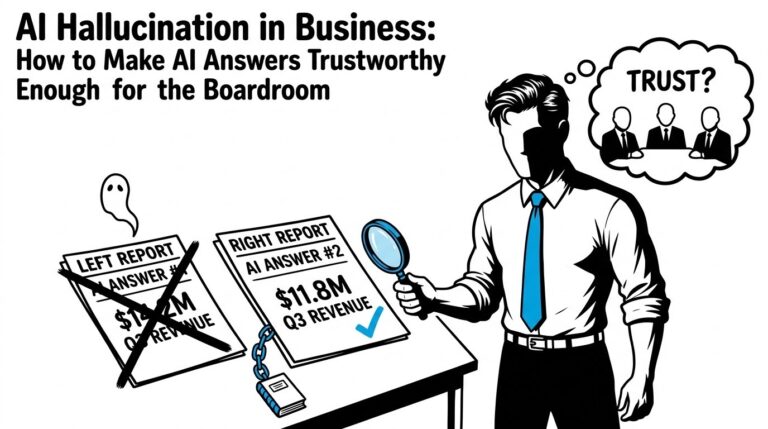
The promise of AI in corporate finance is “set it and forget it.” The reality, for most CFOs trying to integrate these tools, is “set it and babysit it forever.” A September 2025 Wakefield Research survey of 100 mid-market CFOs found that 86% of finance teams have hit AI hallucination issues in production. One CFO on Reddit summed up the current state of AI for finance as “a very smart but drunk assistant”. When the board asks what the AI is actually delivering, the answers are weak time-saved metrics and scenario projections one finance leader described as having “more holes than Swiss cheese”.
Your team just discovered Hermes Agent on GitHub. The CFO wants to know whether you can self-host an AI agent and skip the consultancy invoice. The question feels reasonable, because the agent is MIT-licensed and the VPS costs five dollars and the README says it supports 200+ language models, until you realize the question behind the question is who is accountable when the agent is wrong at month-end close.
Build means your team writes the prompts, configures the tools, connects the data sources, monitors accuracy, maintains the audit trail, and answers to the audit committee when something breaks. Buy means a partner does that under contract, with an SLA your CFO can hold someone to.
The short answer: if you have audit, compliance, multi-user, or SLA needs, you need a partner. If you do not, self-hosting is a credible path.
What FreshBI is
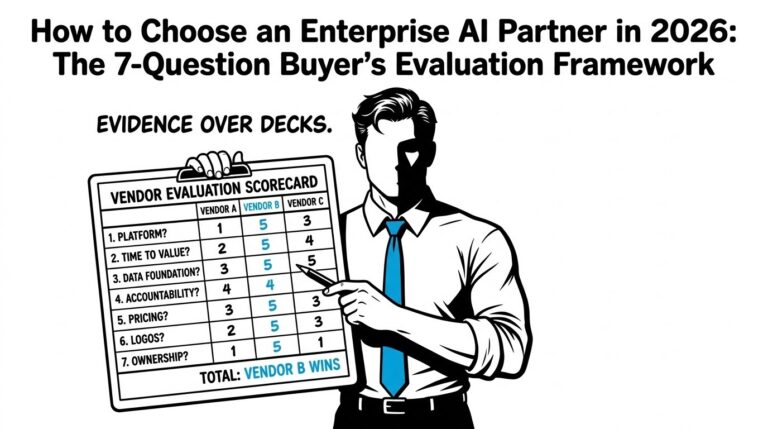
FreshBI is the AI+BI partner for finance and operations leaders. It pairs purpose-built AI agents with a governed data platform to give teams real-time clarity on cash flow, tax exposure, compliance posture, and logistics performance. The result is ai powered bi that connects to your Microsoft stack and produces a working dashboard and live agent in three weeks.
- AI agents built for finance: CFO Agent (tax), DOT Agent (compliance), ELE Agent (logistics), Cash Intelligence Agent (cash flow)
- Data platform: Ontology 1st Design with Medallion Architecture (Bronze, Silver, Gold, Platinum layers)
- Time to value: Three-week sprint to v0.9, then weekly releases
- Pricing: $7,000/month or $77,000/year
- Customer base: 1,000+ companies including Disney, Nestlé, AIG, Intel, FedEx, and Wells Fargo
- Stack alignment: Microsoft Power BI, Power Automate, Copilot
What Hermes Agent is
Hermes Agent is an open-source autonomous agent from Nous Research. It is a general-purpose self hosted ai agent that runs on your own infrastructure, connects to the language model of your choice, and executes tasks through 70+ built-in tools. It is not built for finance specifically. It is built for technical operators who want full control.
- License: MIT License
- Hosting: Self-hosted on a $5 VPS or larger
- Cost: Free software. LLM token costs and hosting costs are separate.
- GitHub stats: 170,000 stars, 28,400 forks, 9,682 commits, version 0.14.0 released May 16, 2026
- Model support: 200+ language models (Nous Portal, OpenRouter, OpenAI, Anthropic, Hugging Face, custom)
- Built-in tools: 70+ (web search, browser automation, vision, image generation, text-to-speech)
- Key features: Persistent memory across sessions, subagent delegation, MCP-compatible
- Platforms: Linux, macOS, WSL2, native Windows (early beta per their README)
FreshBI vs Hermes Agent: side-by-side at a glance
The table below compares both options across the criteria that matter most to a finance or operations buyer. Read “included” as something the vendor delivers under contract. Read “you build” as something your team owns.
| Criteria | FreshBI | Hermes Agent |
|---|---|---|
| Deployment model | Managed by FreshBI team | Self-hosted on your infrastructure |
| License | Commercial (subscription) | MIT (open source) |
| Support tier | Dedicated partner, weekly releases | Community GitHub issues |
| SLA | Contractual SLA included | None |
| Compliance (SOC2/HIPAA/GDPR) | Managed compliance posture | You build and maintain |
| Multi-user / role-based access | Included in platform | You build |
| Audit logging | Built into data platform | You build |
| Time to first value | 3 weeks to v0.9 | Depends on engineering capacity |
| Finance-specific AI agents | CFO Agent, DOT Agent, ELE Agent, Cash Intelligence Agent | General-purpose (you configure for finance) |
| Total cost over 36 months | $231,000 (annual plan) to $252,000 (monthly plan) | $180–$5,400 (hosting/tokens) + engineering labor |
The last row is where most comparisons stop. The Hermes path looks cheaper until you account for the fully loaded cost of the engineer who configures, monitors, and maintains the agent. That line item changes the math.
The AI CFO question: managed agent or self-hosted agent?
The AI CFO use case is the sharpest test of this comparison. A CFO agent needs to pull data from your ERP, run tax calculations, reconcile cash positions, and produce board-ready output. It needs to be right on close day. Every month. Without exception.
The FreshBI CFO Agent in practice
The FreshBI CFO Agent is an AI tax expert that sits on top of the governed Medallion Architecture data platform. It pulls from your Bronze layer (raw data), applies business rules in Silver and Gold, and surfaces the Platinum output that your CFO reads on Monday morning. FreshBI owns the accuracy of that output under contract.
The agent connects natively to Power BI dashboards, so the CFO sees cash flow, tax exposure, and variance analysis in the tool the team already uses. No new login. No new UI to learn.
Hermes Agent configured for finance
Hermes Agent can be configured to do CFO work. It has persistent memory, subagent delegation, and support for 200+ models, which means you can point it at financial data and write prompts for forecasting, variance analysis, or board pack generation. But your in-house team writes those prompts, defines the tools, sets up the model routing, monitors accuracy, and handles the audit trail.
An ai agent for finance is only as reliable as its data governance layer. FreshBI includes that layer. Hermes Agent does not, because it is not a BI platform. It is a general-purpose agent framework.
One CFO who tried to put AI-generated financial models in front of a board put it this way: “I would never take straight AI output and present it as a final deliverable. It’s good to bounce off of but every attempt I’ve made nets a result with more holes than Swiss cheese.” That is the operational reality of running an ungoverned AI agent against financial data. The model looks more confident than it should be, the assumptions underneath are generic, and the analyst ends up rebuilding the output before it leaves the finance team.
The question that decides the choice: who at your company is accountable if the AI agent is wrong on close day?
The accountability gap matters more than the technology gap, because the technology gap closes every quarter as the models improve, but the accountability gap only closes when a human at a named company signs a contract that says they own the answer.

Where FreshBI fits and where Hermes Agent fits
This is the section that matters most. Both options are real. Both have strengths. The right pick depends on your team, your industry, and your tolerance for building infrastructure.
When FreshBI is the right choice
Most enterprise finance and operations leaders are not in that position. You have audit committees, compliance teams, multi-role access requirements, an SLA you can hold somebody to, and a CFO who needs the AI CFO Agent to be correct on the first Monday of every month, not “mostly working” after three sprints of internal tuning. That is the gap a managed AI+BI partner fills. FreshBI is built for regulated industries, multi-user finance teams, and Microsoft-stack environments. If your organization needs SOC2, HIPAA, or GDPR-adjacent compliance posture, FreshBI delivers that under contract.
Companies like Disney, AIG, and Intel do not experiment with ungoverned AI agents in their finance stack. They need audit trails, role-based access, and a vendor they can call. That is the FreshBI buyer profile.
For teams already running Power BI and Power Automate, FreshBI plugs directly into the existing Microsoft stack. It sits alongside Microsoft Copilot for Finance as a complementary layer, not a replacement. Where Copilot handles general productivity, FreshBI’s agents handle domain-specific finance workflows like cash flow prediction and tax analysis.
When Hermes Agent is the right choice
Hermes Agent is real software. 170,000 GitHub stars, an MIT license, 70+ built-in tools, support for 200+ language models. For a technical founder with an engineer who wants to own the stack, it is a credible choice.
It is also entirely reasonable for a CFO to be skeptical of managed AI partners in 2026. Plenty of AI agencies are charging six-figure fees for basic API wrappers around foundation models, and the engineering teams who get pulled into those projects know it. The right question is not “managed or DIY.” The right question is whether the partner has actually shipped this 1,000 times, or is shipping it for the first time on your dime. FreshBI has shipped it 1,000 times, with named customers like Disney, Nestlé, AIG, Intel, FedEx, and Wells Fargo. The wrapper question is fair. The answer should be verifiable.
Hermes fits startups and indie teams comfortable with self-hosted infrastructure. It fits model-agnostic flexibility where you want to swap between OpenAI, Anthropic, OpenRouter, or a local Hugging Face model depending on cost, latency, or data residency requirements. If you want to experiment with different LLMs weekly and do not want vendor lock-in, Hermes gives you that freedom.
Hermes is also a fit when the “agent” is not the product yet. If you are still figuring out the workflow (what data matters, what questions users ask, what outputs are trustworthy), the fastest path is often to run a general-purpose agent framework, test ideas, and throw away what does not work. That is exactly the kind of iteration Hermes enables.
The hidden cost of “free”: a simple 36-month reality check
Hermes Agent is free. Running Hermes Agent in a finance workflow is not free.
If you use Hermes for anything close-adjacent (cash, revenue, tax, compliance), you need operational controls. At minimum, that typically means:
- Data connectors: ERP, payroll, banking, billing, and warehouse access
- Credential management: secrets vault, rotation, access policies
- Observability: logs, traces, error tracking, run history
- Evaluation: test sets, regression checks, hallucination detection
- Approval workflows: human sign-off before numbers go to leadership
- Security posture: least-privilege roles, network controls, data retention policies
Even if your hosting and tokens are cheap, the labor is not. Over 36 months, the cost is usually determined by one question: How many hours per week does someone spend keeping the agent reliable?
| Hermes operational load (typical) | Low (prototype) | High (close-adjacent) |
|---|---|---|
| Hours/week of engineering ops | 2–5 | 10–20+ |
| Total engineering hours per year | ~100–260 | ~520–1,040+ |
| Fully-loaded annual labor cost (typical US engineering) | ~$15k–$60k | ~$120k–$240k+ |
| Observability and incident tooling (logs, traces, alerting) | $0–$3k/year | $5k–$25k+/year |
| Evaluation and regression testing (datasets, harnesses, reviews) | Ad hoc | Ongoing and required |
Over 36 months, the compounding cost is not the model. It is the steady engineering time required to keep the system correct, secure, and explainable. By month 36, the “free” agent has cost more in engineering hours than the managed partner would have cost in subscription fees.
What month one looks like with each option
FreshBI: discovery to live agent in three weeks
Week 1: discovery and scope lock. FreshBI aligns on the finance outcomes that matter most. It defines the reporting grain, the key metrics, the approval path, and the data sources. The goal is clear success criteria, not a vague “build an agent” mandate.
Week 2: data and semantics. FreshBI connects to the relevant systems, validates definitions, and builds a finance-ready semantic layer. This is where finance teams typically win or lose trust: consistent metrics, consistent filters, and consistent logic across reports and conversations.
Week 3: agent goes live with guardrails. FreshBI deploys the agent with role-based access, run history, and controlled outputs. Teams get a usable workflow fast: ask a question, see the source, validate the number, and ship the insight without guessing how it was produced.
Hermes Agent: you are the deployment team
With Hermes, the first month is rarely about “using the agent.” It is about turning an agent framework into something your finance team can trust. That includes integrating data, defining permissions, building evaluations, setting up logging, and establishing a human approval workflow.
Even early experimentation can get expensive when context and memory management drift. As one user put it: “Here because since today my Hermes agent is loading 130k tokens as a system prompt. I burned through my codex 5 hour limit in about 5 minutes.”
And even when memory works at first, production behavior is harder than the demo. Another user noted: “I’ve tried various memory providers and ended up abandoning them all. On paper, it seems like a great idea; it works well for a few weeks, but then it starts ‘remembering’ things a human would consider clearly obsolete, or not important enough to derail a conversation.”
The math is uncomfortable for buyers who started the search hoping the open-source path would be cheaper, because the LLM-token line is the only cost they were measuring, and the engineering-labor line is where the actual money goes.
Governance, security, and auditability for finance teams
FreshBI: governance built in for finance workflows
Finance teams do not just need answers. They need defensible answers. FreshBI is built around governed data and repeatable logic, so the agent is operating on a foundation finance can audit.
- Medallion Architecture: Data is organized from raw to cleaned to curated so stakeholders can trace what changed and why. This reduces metric drift and makes investigations faster.
- Role-based access: Access is controlled by user role so sensitive financial data is not exposed to the wrong audience. This matters for payroll, banking, revenue detail, and any close-adjacent workflow.
- Audit logging: Activity is logged so teams can answer who asked what, what data was used, what logic ran, and what output was produced. That is the difference between an internal tool and a finance-grade system.
Hermes Agent: what is not included by default
Hermes Agent is an agent framework. It is not a governed finance platform, and it does not claim to be. Several capabilities finance teams commonly require are outside the scope of an agent framework unless you build them.
- Role-based access: You need to design and enforce permissions across data sources, tools, and outputs.
- Audit logging: You need end-to-end logging across prompts, tool calls, retrieved context, and final outputs, plus retention and review processes.
- Data lineage tracking: You need a lineage story that survives schema changes, metric changes, and reprocessing, so leaders can trust month-over-month comparisons.
None of this makes Hermes a bad choice. It just means you should budget for the engineering work required to add governance, because it will not appear automatically when you install an agent.
The verdict: FreshBI vs Hermes Agent for your team
If you are building an internal developer platform and the agent is still experimental, Hermes Agent is a strong framework. It gives engineering teams flexibility, fast iteration, and control.
If you need a finance-ready agent that leadership can trust for close-adjacent workflows, FreshBI is the decisive choice. You are not buying a “chat UI” or a model wrapper. You are buying a managed system with governed data, consistent definitions, auditability, and operational ownership.
Frequently Asked Questions
What should I ask vendors to prove an AI agent is reliable before we trust it for financial reporting?
Ask for evidence, not promises. Require a documented evaluation approach with test cases tied to your real metrics, plus regression testing that runs after data model changes. Ask to see run history, source citations, and how the system handles ambiguity, missing data, and conflicting definitions. Also require an explanation of the human approval workflow for any close-adjacent output.
How do I run a low-risk pilot of an AI finance agent without disrupting month-end close?
Start with a parallel run. Pick one or two recurring questions that are time-consuming but not posting-critical, then compare agent outputs to your existing reports for several cycles. Lock definitions, restrict access to read-only sources, and require human sign-off on every result. Treat the pilot as an evaluation project, not a deployment project.
What internal roles do we need to budget for if we choose a DIY open-source agent approach?
Budget for an engineering owner, plus partial time from data engineering and security. You will also need a finance subject matter owner to validate definitions and exceptions, and someone to manage evaluation datasets and approval workflows. If the system touches close-adjacent work, expect ongoing operational ownership, not a one-time setup.
How should procurement and legal evaluate vendor risk for a managed AI+BI partner?
Request security documentation, data handling policies, access controls, and audit logging details. Clarify data residency, retention, and breach notification timelines. Ask about subcontractors, model providers, and how customer data is used or not used for training. Also confirm SLA coverage, support response times, and exit plans for data portability.
What is the best way to measure ROI for AI in finance beyond token or subscription costs?
Measure time saved on recurring workflows, reduction in rework, and fewer reporting delays. Track cycle time for answering ad hoc questions, time to produce executive-ready explanations, and the number of reconciliations avoided due to consistent definitions. Include the cost of operational labor, governance work, and ongoing testing, because those are often the dominant costs in DIY approaches.
How do we keep an AI agent from producing inconsistent answers when the underlying data changes?
Stabilize definitions in a semantic layer and enforce a single source of truth for metrics. Use versioned models, automated regression tests, and change control for schema and logic updates. Require citations and run history so changes are detectable and explainable. Most importantly, implement approvals for close-adjacent outputs so unexpected shifts do not silently reach leadership.