
AI and Machine Learning
Delivery & Project Staffing: The Team Was Assembled Before the Deal Closed
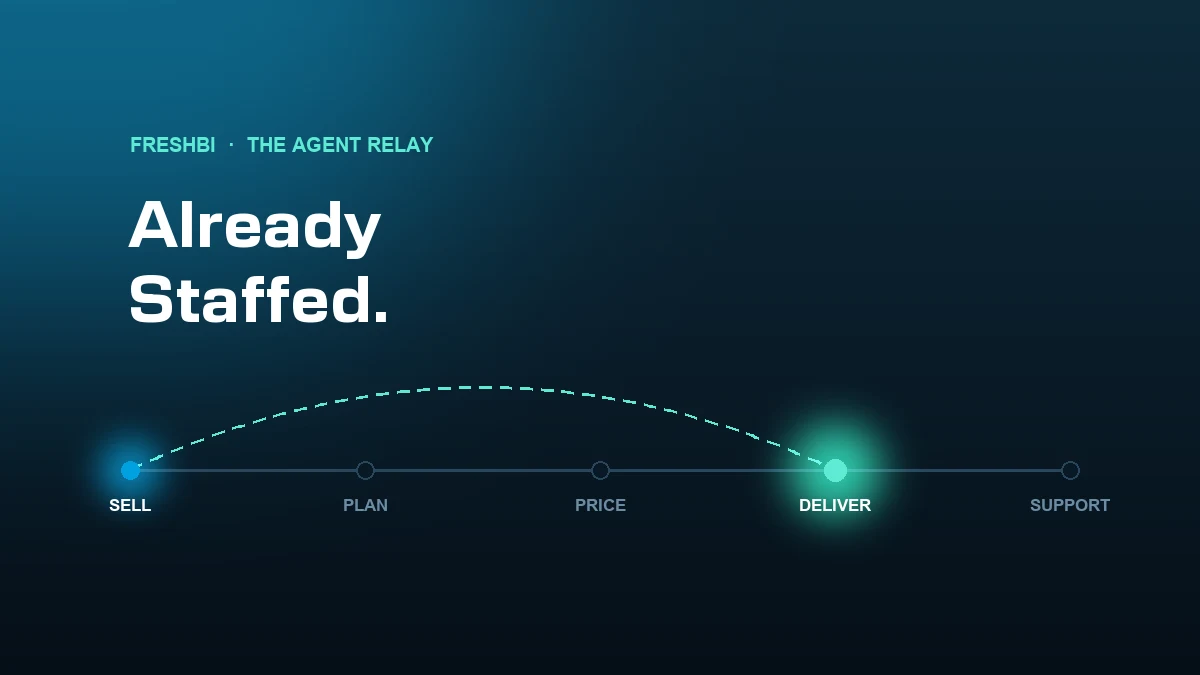
The Kickoff Call Where the Team Doesn't Match the Pitch
The deal closed on a Friday. The sales conversation covered a lot of specifics — the client runs their warehouse data on Snowflake, not SQL Server, and their biggest headache is that nobody trusts the inventory numbers because three systems disagree with each other. By Monday's kickoff, the delivery lead introduces a team that's never touched Snowflake, and opens with "so, walk us through your systems again?"
Nobody did anything wrong, exactly. The deal was real, the team is competent, the staffing just happened separately from the conversation that should have driven it — assigned from whoever had open capacity that week, not from what the engagement actually needs.
Why Staffing Happens Separately From The Sale
Staffing is usually a capacity problem solved by whoever runs the delivery calendar, working from a ticket that says "new client, start Monday" — not from the conversation that revealed what this specific client actually needs. The ticket is a scheduling instruction. It was never built to carry technical nuance.
- Staffing tools optimize for availability, not fit. The question being answered is "who's free," not "who's right for what this client specifically described."
- The brief arrives after the decision. By the time a project summary circulates, the team is often already assigned — so the summary gets read as background, not as a staffing input.
- Nobody owns the handoff from "closed" to "staffed." Sales owns the close. Delivery owns the calendar. The specifics that should connect the two have no owner in between.
What Changes When Staffing Comes From The Same Agent
In an Agent Relay, staffing isn't a separate decision made from a ticket — it's a direct continuation of the same conversation that shaped the proposal and the plan. The agent that knows the client runs on Snowflake is the same one flagging that this engagement needs a specialist who's actually worked in Snowflake — not a generic "data engineer" slot filled by whoever's next on the bench.
This is the same throughline as every other leg of the relay: the information doesn't get rediscovered at each new stage, because it never left in the first place. Staffing stops being a scheduling exercise and starts being a continuation of understanding the client.
What This Actually Looks Like
- The specific requirement drives the assignment. "Runs on Snowflake" isn't a line buried in a brief — it's the reason a particular specialist gets matched to this engagement, not a different one with different tools.
- Capacity gets reserved before the ink is dry. The moment terms are seriously being discussed, not after signature, real capacity on the right person's calendar gets provisionally held.
- The team walks into kickoff already briefed. Nobody opens with "walk us through your systems again" — the specifics already traveled with the engagement.
- Reassignment is rare, not routine. Because the initial match was informed by the real requirement, "actually, we need someone else" stops being a normal first-week event.
Why This Matters Beyond Speed
A mismatched delivery team doesn't just slow a project down — it reads as a broken promise. The client didn't sign up for "a team," they signed up for a team that understood their specific problem, because that's what the sales conversation demonstrated. When the people who show up don't reflect that same understanding, it doesn't feel like an internal scheduling issue. It feels like the company they just trusted their business to wasn't actually listening.
Continuity here is what keeps that trust intact: the team isn't a random draw from the bench, it's the direct result of what the client already told you about themselves.
Next In The Relay
This is the fourth post in the Agent Relay series — one continuous AI carrying context across the whole customer journey instead of resetting at every handoff. Next: how that same continuity shows up in a completely different vertical, starting with demand forecasting in retail and e-commerce.
If your delivery team is still meeting the client's systems for the first time at kickoff, that's not a staffing problem. That's a relay with a broken leg.