
AI and Machine Learning
Customer Support: The Agent That Answers the Ticket Already Knows the Deal
The Ticket That Opens With "Can You Remind Us What Was Agreed?"
It's the 26th. The finance lead at a customer opens a ticket: the dashboard is showing yesterday's numbers, and month-end close is in two days. The support rep who picks it up has never spoken to this customer. The queue shows an account name, a priority field set to "Normal," and one line of description: "Dashboard stale."
The first reply is a perfectly reasonable one: "Could you tell us which dashboard, which data source, and when you first noticed?" Every one of those questions already has an answer. The customer gave most of it in the original sales conversation, along with the sentence that mattered most: "the last week of the month is the one week we can't have a bad number." Nobody on the support side has ever read that sentence.
Why Support Starts From Zero
Support doesn't start from zero because the team is careless. It starts there because a ticket queue is built to move volume, and the context a ticket actually needs lives somewhere else: in a sales conversation, a proposal, a kickoff note, all written by people who have since moved on to other customers.
- The ticket carries the symptom, not the history. "Dashboard stale" is accurate, and nearly useless without knowing what was promised about freshness.
- Priority fields are generic. "Normal" can't express "this is the one week this customer can't afford a bad number," because nobody ever told the system.
- The commitments sit in a document nobody opens. The proposal says what was agreed, but a rep triaging forty tickets isn't reading proposals.
What Changes When It's The Same Agent
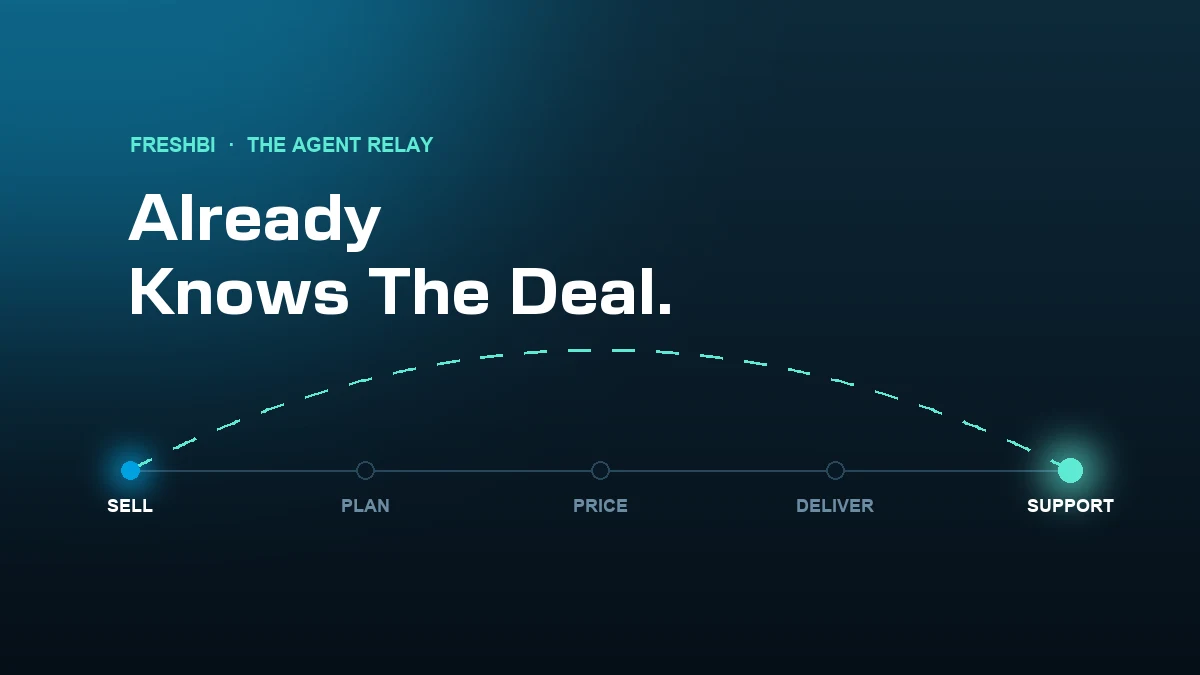
In an Agent Relay, the agent answering the ticket is the one that sat in the first conversation, helped draft the plan, shaped the proposal, and flagged the team in delivery. It never read a summary of the deal. It was there when the customer named the week that mattered.
So the ticket doesn't arrive as a stranger. "Dashboard stale" arrives attached to a customer who named a critical window, a refresh time that was agreed in the proposal, and a data connection the delivery team set up. The first reply isn't a list of questions. It's a diagnosis: which connection, whether the result matches what was promised, and what's already being done about it.
What This Actually Looks Like
- Urgency comes from the customer's own calendar. A ticket landing inside the window the customer called critical is handled as urgent, even though the priority field says "Normal."
- The ticket is checked against what was promised. If the proposal says the numbers refresh by a set time each morning, "stale after that time" is a defect, not a misunderstanding, and the agent can tell the difference.
- Nothing the customer already said gets asked again. Which dashboard, which source, who owns it: all known, so the first reply starts at the diagnosis.
- Fixes stay on the account. If the cause is a connection that keeps timing out, that's recorded against the customer, so the next ticket doesn't start cold either.
Why This Matters Beyond Speed
A fast answer to the wrong question still reads as not listening. What customers notice in support isn't the response time, it's whether the person answering knows who they are. Asking for something they already said in the first conversation breaks the continuity the sale was built on. The sale told them "we understand your business." The first support ticket is the first time that claim gets tested without a salesperson in the room.
There's an accountability piece too. When the same agent holds the promise and the problem, "what did we agree?" stops being an argument to settle and becomes a record to read.
Next In The Relay
This is the eighth post in the Agent Relay series, one continuous AI carrying context across the whole customer journey instead of resetting at every handoff. Next: what happens when the customer isn't filing a ticket at all, but quietly waiting on a shipment nobody has told them is late.
If your support team opens every ticket by asking what was agreed, that's not a support problem. That's a relay with a broken leg.